
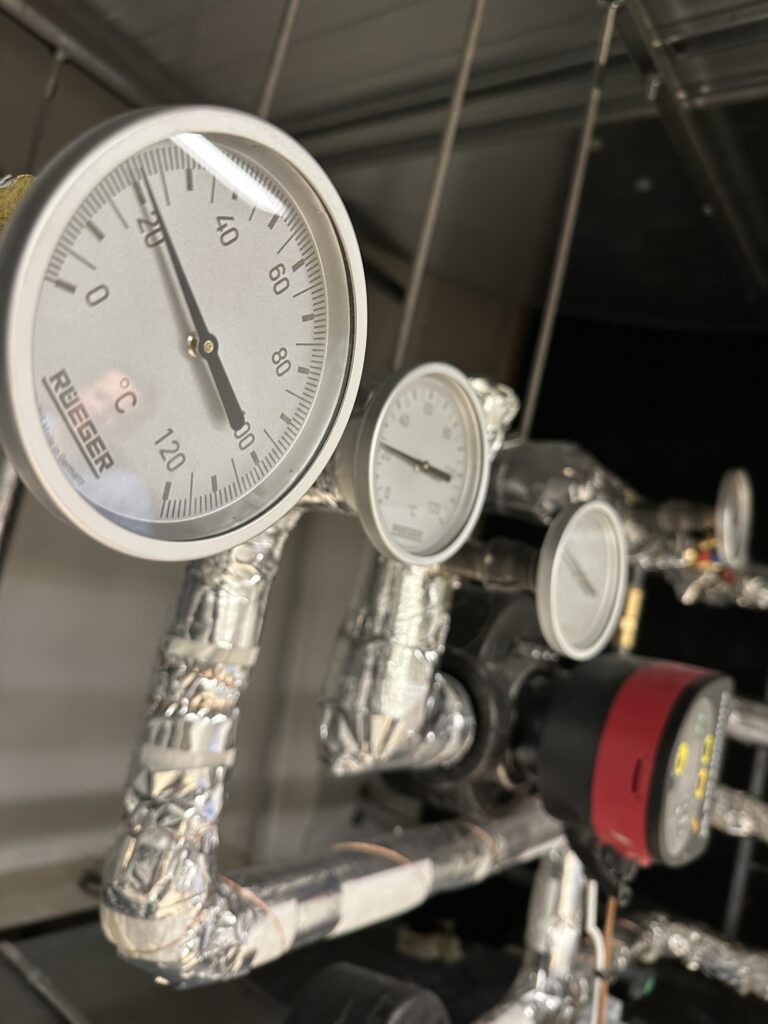

In 2023, HOFOR first announced a gradual reduction of the temperature in the district heating network. The plan is to lower the supply temperature in the district heating system over a ten-year period, reaching approximately 65°C on normal days and up to 75°C on the coldest days by 2033.
The green transition of district heating is a key focus for utility companies across Denmark, and similar initiatives are being introduced in several other parts of the country.
The reason for this transition is that more renewable heat sources, such as seawater, ambient air, wastewater, and geothermal energy, will be integrated into district heating systems. These energy sources operate most efficiently at lower temperatures. At the same time, lower temperatures reduce heat loss in the network, making the system more energy efficient.
What does this mean for your property?
Most properties will be able to accommodate the lower temperatures with only minor adjustments. However, older heating systems, particularly those installed before 1950, may require modifications.
For these properties, it may be relevant to carry out a more detailed review of the heating system. This includes the heating plant, radiators, and the property’s riser system, which helps distribute heat throughout the building.
CEJ’s Department of Energy and Environment offers heating system assessments, where we evaluate whether your system is ready for the new operating conditions or whether modifications are needed to maintain indoor comfort and avoid higher heating costs and extra costs.
We can also assist with applications for funding through municipal grant programs.
You can find more information on HOFOR’s website, including a map showing when the new temperature levels are scheduled to be tested and implemented in your area. The chart shows when they plan to start the implementation and when they expect to finish it.